




 610 minutes
 Share
ShareASIC vs GPU Mining: Which Mining Method is Better in 2026?
Choosing between ASIC and GPU mining is one of the most important decisions for anyone entering crypto mining in 2026. These two methods differ significantly in terms of cost, efficiency, flexibility, and long-term usability.
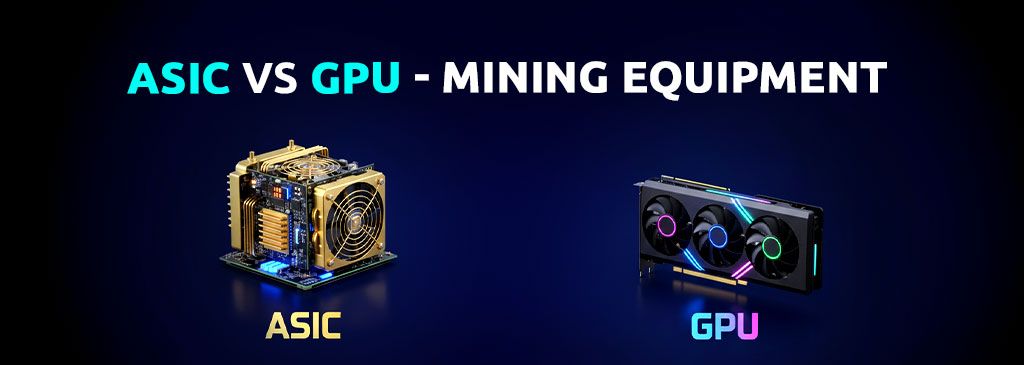
ASIC miners are designed for a single purpose and deliver maximum performance for specific algorithms, while GPU mining relies on general-purpose graphics cards that can mine multiple coins. There is no universally “better” option, as each approach suits different goals and experience levels. Factors such as electricity costs, available space, noise tolerance, budget, and risk appetite all influence the right choice.
For beginners, understanding these practical differences is more valuable than focusing solely on potential profits. This comparison examines ASIC and GPU mining realistically, helping users identify which method aligns best with their expectations, resources, and mining objectives in 2026.
What is ASIC Mining?
ASIC mining uses Application-Specific Integrated Circuit devices that are built to perform a single task: mining a specific algorithm as efficiently as possible. In practice, this means ASIC miners deliver extremely high hashrate and energy efficiency compared to other hardware. They are most commonly used for established networks such as Bitcoin and Litecoin, where competition and mining difficulty are very high.
From a realistic perspective, ASIC mining is best suited for users who are prepared to make a significant upfront investment and operate hardware continuously. These devices are expensive, generate substantial noise and heat, and offer little flexibility if market conditions change.
However, when paired with low electricity costs and proper cooling, ASIC miners can produce stable results. For miners focused on long-term operations and predictable performance, ASIC mining remains a dominant but capital-intensive approach in 2026.
What is GPU Mining?
GPU mining relies on graphics cards to process cryptographic calculations and secure blockchain networks. Unlike ASICs, GPUs are general-purpose devices, meaning they can mine different cryptocurrencies by switching algorithms or software. This flexibility makes GPU mining popular among beginners and hobbyists who want to experiment without committing to a single coin.
In 2026, GPU mining is commonly used for networks such as Ethereum Classic and other altcoins that resist ASIC dominance. From a practical standpoint, GPU rigs are easier to resell or repurpose for gaming, design, or AI workloads if mining becomes unprofitable. However, GPUs are less energy-efficient than ASICs and often deliver lower hashrate for major coins.
As a result, GPU mining offers adaptability and lower entry barriers, but usually comes with higher long-term uncertainty compared to dedicated ASIC setups.
ASIC vs GPU Mining – Key Differences
The core differences between ASIC and GPU mining become clear when comparing performance, costs, and real-world usability. ASIC miners deliver far higher hashrate and energy efficiency, making them ideal for competitive networks, but they require significant upfront investment and consume large amounts of power continuously.
In contrast, GPU mining offers lower performance but greater versatility, allowing miners to switch coins or exit mining more easily. Noise and heat are also important considerations: ASICs are loud and typically unsuitable for apartments, while GPU rigs are quieter and easier to cool. From a financial perspective, ASICs can generate steadier returns when electricity is cheap, but they depreciate quickly if algorithms change. GPUs retain resale value and flexibility, yet face higher risk from fluctuating altcoin markets. Ultimately, the choice depends on whether efficiency or adaptability matters more to the miner.
Profitability Comparison in 2026
Profitability in 2026 differs significantly between ASIC and GPU mining due to efficiency, market conditions, and operating costs. ASIC mining tends to generate more consistent returns when paired with low electricity prices, as these machines are optimized for specific algorithms and deliver higher output per watt.
However, profitability depends heavily on network difficulty and hardware lifespan, meaning returns can decline rapidly if newer models are released. GPU mining, on the other hand, is more sensitive to market volatility. While GPUs may be profitable during favorable altcoin cycles, earnings can fluctuate sharply with price drops or difficulty increases. Electricity costs play a critical role for both methods, often determining whether mining produces profit or loss. In regions like Georgia, where electricity rates can be lower than global averages, both ASIC and GPU mining may remain viable, but ASIC setups generally offer clearer profitability under stable conditions.
Electricity and Setup Considerations
Electricity and physical setup are often the deciding factors between ASIC and GPU mining. ASIC miners consume large amounts of power and must operate continuously, making electricity pricing critical to profitability. Without access to low-cost energy, ASIC mining can quickly become unsustainable.
In contrast, GPU rigs typically consume less power per unit and allow more flexible configurations, which can be advantageous for home setups. Noise and heat management are equally important considerations. ASICs are loud and generate intense heat, often requiring dedicated rooms, industrial ventilation, or soundproofing. GPU mining setups are generally quieter and easier to cool, making them more suitable for residential environments.
In Georgia, where electricity prices can reach as low as $0.03 per kWh, both methods benefit, but ASIC mining gains a stronger advantage due to its efficiency. Proper wiring, cooling, and safety measures remain essential regardless of the chosen method.
ASIC vs GPU Mining for Beginners
For beginners, choosing between ASIC and GPU mining should be based on risk tolerance, budget, and learning goals rather than raw performance. GPU mining is generally more beginner-friendly because it offers flexibility, lower entry costs, and easier exit options if mining becomes unprofitable. GPUs can be resold or reused for other purposes, reducing financial risk.
ASIC mining, while more efficient, demands higher upfront investment and a deeper understanding of power management, cooling, and long-term planning. Mistakes with ASIC setups can be costly, especially when electricity prices rise or hardware becomes outdated. Beginners who want hands-on experience and gradual learning often find GPU mining more forgiving, while those with access to cheap electricity and a clear strategy may consider ASICs.
Ultimately, starting small and scaling based on experience is the safest approach for new miners in 2026.
When ASIC Mining Makes More Sense
ASIC mining makes more sense when efficiency, scale, and long-term operation are the primary goals. This method is best suited for miners who have access to consistently low electricity costs, adequate space, and proper cooling infrastructure. In regions like Georgia, where power prices can be significantly lower than global averages, ASIC miners can operate more profitably than in high-cost environments. ASIC mining is also appropriate for users who plan to mine established networks such as Bitcoin or Litecoin, where ASIC resistance is no longer viable.
From a practical standpoint, ASICs are ideal for miners who prefer predictable performance and are willing to commit capital upfront. However, this approach assumes stable market conditions and a readiness to manage noise, heat, and equipment depreciation. When these conditions are met, ASIC mining offers superior efficiency and clearer long-term economics in 2026.
When GPU Mining Makes More Sense
GPU mining is a better choice when flexibility, adaptability, and lower risk are priorities. This approach suits miners who want the ability to switch between different coins or algorithms as market conditions change. GPU mining is also ideal for users who prefer smaller, modular setups that can be expanded gradually or shut down easily if profitability declines.
For home miners, GPUs offer practical advantages due to lower noise levels and easier cooling requirements compared to ASICs. In addition, GPUs retain value beyond mining, as they can be resold or repurposed for gaming, content creation, or AI-related tasks.
While GPU mining may not deliver the same efficiency as ASICs for major cryptocurrencies, it provides a safer entry point for experimentation and learning. In 2026, GPU mining remains a sensible option for miners seeking versatility over maximum performance.
Final Verdict – Which One Should You Choose?
There is no universal answer to whether ASIC or GPU mining is better in 2026, as the right choice depends entirely on individual circumstances. ASIC mining favors users who have access to low electricity costs, sufficient space, and the ability to manage noise and heat over long periods. It offers higher efficiency and more predictable performance but comes with higher financial risk and limited flexibility.
GPU mining, on the other hand, prioritizes adaptability and lower entry barriers, making it more suitable for beginners and miners who value the option to change strategies or exit mining easily. When deciding, miners should assess their budget, electricity pricing, technical experience, and risk tolerance.
By aligning mining methods with realistic expectations and long-term goals, users can make informed decisions and choose the approach that best fits their resources and objectives in 2026.