




 6 minutes
 Share
ShareHow to Calculate if Mining is Profitable?
Crypto mining has always been attractive because it allows individuals to earn digital assets directly, but in 2025 the challenge is no longer about setting up equipment alone, it is about ensuring the operation is profitable.
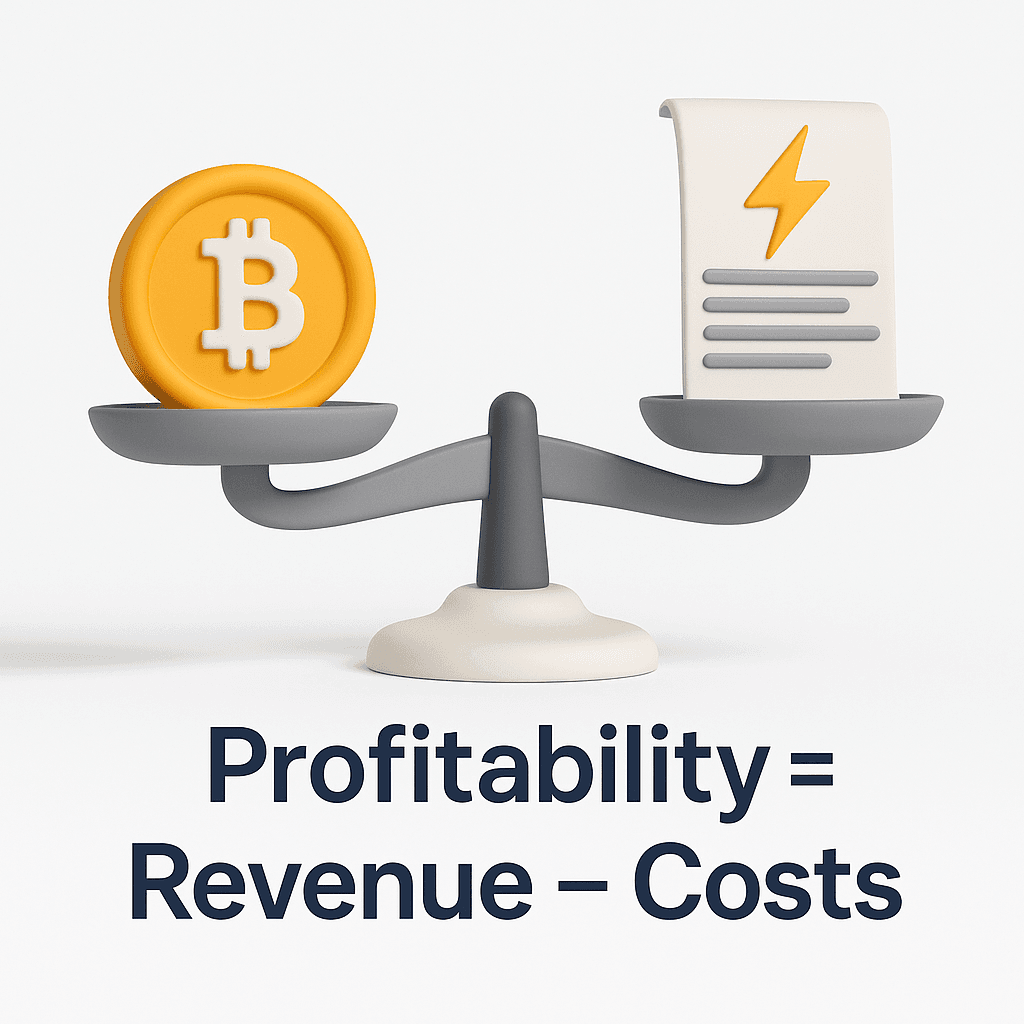
Profitability is the balance between mining revenue, which depends on hashrate, coin prices, and network difficulty, and the costs, mainly electricity and hardware expenses. Without careful calculation, even the most powerful mining rig can quickly turn into a financial burden. For beginners and professionals alike, profitability analysis is the first step before investing in hardware, joining a pool, or committing to long-term energy contracts.
By evaluating costs, potential income, and risks, miners can make informed decisions and avoid costly mistakes. This ensures mining remains sustainable, whether it is done at home on a small scale or as part of a larger operation. But first, learn everything about Crypto Mining in Georgia in our blog.
Key Factors That Affect Profitability
Calculating whether mining is profitable requires examining several critical variables. The first is hashrate and mining difficulty, a higher hashrate means more processing power, but difficulty adjustments on networks like Bitcoin can reduce earnings over time.
Electricity costs are the second and often most decisive factor, since constant energy consumption can quickly outweigh rewards if local tariffs are high. Hardware costs and efficiency also matter: modern ASIC miners provide more hashes per watt, while outdated models may consume energy without producing sufficient returns.
Finally, coin price volatility plays a huge role, as sudden price drops can make an otherwise profitable operation unviable. Together, these four factors create the framework miners must analyze before committing resources. By balancing efficiency, power usage, and market trends, miners can better predict whether their operations will generate positive returns.
Using Mining Profitability Calculators
One of the easiest ways to estimate potential earnings is by using mining profitability calculators. These tools take into account factors such as hashrate, power consumption, electricity cost, and current coin prices to give an approximate daily, monthly, or yearly profit projection. By entering your hardware specifications and local tariffs, you can quickly understand whether mining will generate income or lead to losses. Popular calculators in 2025 include:
- WhatToMine – Supports a wide range of coins and is especially popular among GPU miners.
- NiceHash Calculator – Integrates directly with NiceHash software, allowing quick earnings forecasts.
- Minerstat – Professional tool that provides profitability metrics and real-time monitoring.
For example, entering the specifications of an Antminer S19 Pro with Georgian electricity prices can instantly reveal how much Bitcoin mining could earn each month.
ROI (Return on Investment) and Break-Even Point
Understanding profitability also means knowing how long it will take to recover your initial investment. This is measured by ROI and the break-even point, which depend on hardware cost, efficiency, and market conditions. Key aspects to consider include:
- How to Estimate ROI – Divide the cost of hardware and setup by expected monthly earnings to calculate the payback period.
- Timeframe for Profitability – Depending on equipment and electricity rates, ROI may take from several months to a few years.
- Risks and Uncertainties – Sudden coin price drops, mining difficulty increases, or hardware failures can extend the break-even period significantly.
By carefully evaluating ROI, miners can decide whether the investment makes sense or if alternative options such as cloud mining or staking may be more viable.
Profitability in Georgia’s Mining Environment
When assessing mining profitability in Georgia, several local factors give miners an edge but risks remain. Key considerations include:
- Electricity Tariffs in Georgia – In 2025, electricity costs for residential users in many Georgian areas may be as low as US$0.03 per kWh under favorable contracts or in regions with subsidized or hydroelectric sources. For miners paying regular grid rates, the cost is higher but still often well below global averages.
- Local Advantages and Challenges – Georgia’s abundant hydroelectric power and mountainous terrain allow access to low-cost or off-grid energy options. On the other hand, miners must navigate challenges like infrastructure reliability, regulatory uncertainty, and maintenance of cooling and ventilation in varied climates.
- Hardware and Market Context – Using modern efficient ASIC or GPU setups makes a larger difference in Georgia where electricity is inexpensive. Coin price volatility and global mining difficulty still affect earnings even with local cost advantages.
Together, these factors show that mining in Georgia can be profitable, but only with careful planning and realistic estimations.
Alternatives if Mining Isn’t Profitable
Not every mining setup will achieve profitability, especially when electricity costs rise or market conditions turn unfavorable. Fortunately, there are several alternatives that allow individuals to remain active in the crypto ecosystem without running their own rigs:
- Cloud Mining – Renting hashpower from remote data centers eliminates the need for hardware ownership. While returns are smaller, risks such as equipment failure and high electricity bills are avoided.
- Staking – Proof-of-Stake (PoS) coins allow users to earn rewards by locking assets in a wallet, consuming little energy compared to mining.
- Trading or Converting Mined Coins – Platforms like Cryptal let users convert assets instantly or trade them on the spot exchange, which can be more efficient than holding mined coins.
- Diversification – Splitting investments across mining, staking, and trading reduces reliance on a single income stream.
Final Thoughts
Calculating whether mining is profitable in 2025 is more than just running numbers, it is about understanding the balance between costs, rewards, and risks. Hashrate, electricity prices, hardware efficiency, and market volatility all play vital roles in shaping the outcome.
Tools such as profitability calculators provide quick insights, while ROI and break-even analysis reveal the long-term picture. In Georgia, where electricity tariffs can be lower than global averages, mining may still be an attractive option, but it requires careful planning and continuous monitoring.
For those who find traditional setups too risky, alternatives like cloud mining, staking, and trading remain practical ways to engage in crypto. Ultimately, profitability should be viewed not as a guarantee but as a moving target influenced by technology, energy markets, and regulation, making ongoing evaluation essential for miners at every level.