




 5 minutes
 Share
ShareExchange Wallet vs Outside Wallet: A Complete Guide for 2025
Crypto wallets play a central role in managing and protecting digital assets, serving as the gateway between users and the blockchain. At their core, wallets store the keys that provide access to funds rather than the assets themselves.
In the broader crypto landscape, wallets are generally divided into categories such as hot, cold, custodial, and non-custodial. Among these, two of the most commonly compared options are exchange wallets and outside wallets, each offering unique benefits and risks.
For beginners, understanding the difference between these two types is essential when deciding how to secure and use crypto effectively. While exchange wallets offer convenience, outside wallets provide greater autonomy.
This article explores their differences in detail and helps readers determine which choice best suits their individual needs. To understand what are this digital asset storage units, you can read our guide Crypto Wallet – Explained with Daily Terms.
What is an Exchange Wallet?
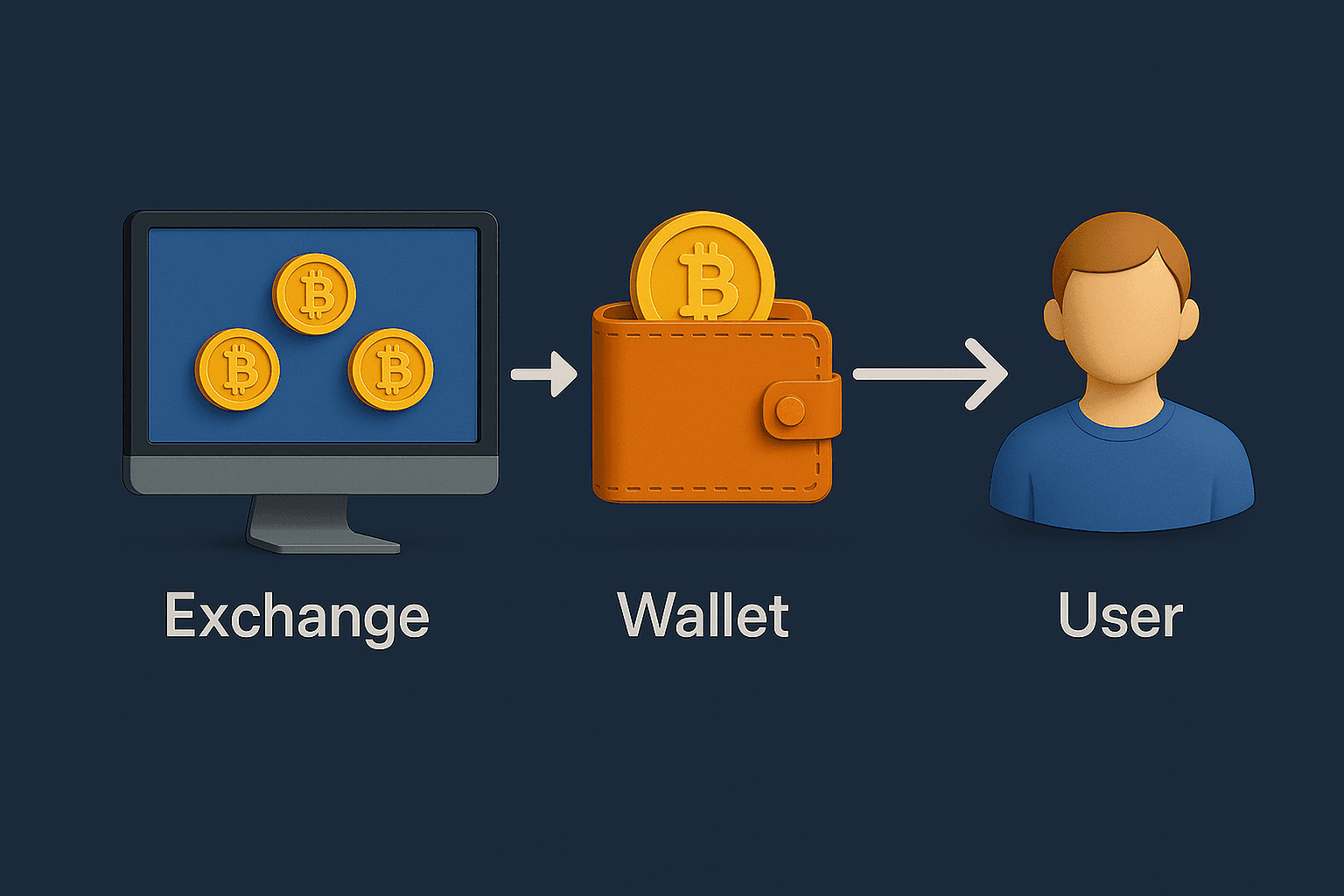
An exchange wallet is a custodial wallet that is provided directly by a trading platform. When users deposit crypto into an exchange, such as Cryptal, their assets are automatically stored in the platform’s internal wallet.
This setup removes the need to manage private keys, since the exchange holds them on the user’s behalf.
For beginners, this is often the easiest and fastest way to start using crypto, as funds remain readily available for buying, selling, or converting.
Advantages of an Exchange Wallet include:
- Ease of use – no technical setup required.
- Instant access – funds are available for trading or converting immediately.
- Integrated services – connects directly to exchange features like Spot Trading and Convert on Cryptal.
- Beginner-friendly – ideal for users just starting their crypto journey.
While exchange wallets are convenient, users should also consider the risks, such as dependence on the platform’s security and regulations.
What is an Outside Wallet?
An outside wallet, also known as a non-custodial wallet, is a type of wallet where users retain full control over their private keys. Unlike exchange wallets, no third party manages access to the funds, meaning ownership and responsibility rest entirely with the individual. Outside wallets come in various forms, including hardware wallets like Ledger or Trezor, and software wallets such as MetaMask or Hot & Cold Wallets. These wallets are widely chosen by users who prioritize autonomy and security over convenience.
Advantages of an Outside Wallet include:
- Full ownership – only the user holds the private keys.
- Higher security – less vulnerable to exchange-related hacks or outages.
- Flexibility – works with multiple exchanges and DeFi applications.
- Offline options – hardware wallets keep keys disconnected from the internet.
Although outside wallets offer stronger control and protection, they also require careful management. Losing private keys or recovery phrases can mean permanent loss of access to funds.
Key Differences Between Exchange and Outside Wallets
When comparing exchange wallets with outside wallets, the most important factor is control over private keys. Exchange wallets, such as those offered by Cryptal, hold keys on behalf of users, while outside wallets place this responsibility directly in the user’s hands. Security also differs greatly: exchange wallets depend on the platform’s protection measures, whereas outside wallets often provide enhanced safeguards through offline storage. Convenience is another key aspect, with exchange wallets offering instant access to trading tools, while outside wallets demand more setup but provide greater flexibility.
Main differences include:
- Control: Exchange manages keys vs. user controls keys.
- Security: Dependent on exchange vs. independent, often stronger with hardware.
- Accessibility: Exchange wallets are quick and beginner-friendly vs. outside wallets require setup.
- Flexibility: Limited to one platform vs. usable across multiple platforms.
- Responsibility: Exchange handles security vs. user must secure keys.
Understanding these differences helps users align wallet choice with their goals and risk tolerance.
Which Wallet Should You Choose?
Choosing between an exchange wallet and an outside wallet largely depends on a user’s experience level, goals, and comfort with responsibility.
For beginners, an exchange wallet such as the internal wallet on Cryptal is often the most practical option. It provides a simple way to buy, sell, and convert assets without worrying about private key management. This convenience allows new users to explore crypto confidently while relying on the platform’s built-in security.
On the other hand, experienced users who want to store larger amounts of crypto or interact with decentralized applications may prefer outside wallets. These wallets offer greater control and advanced security features, but they also require users to safeguard their own keys.
In essence, there is no universal answer. Exchange wallets are better for convenience and active trading, while outside wallets are ideal for long-term storage and autonomy. The choice depends on how users plan to manage their digital assets.
Final Thoughts
Both exchange wallets and outside wallets serve important purposes in the world of crypto, and neither can be considered the absolute best for every user. Exchange wallets, like those provided by Cryptal, excel in simplicity and accessibility, making them perfect for newcomers and active traders who need quick access to their funds. Outside wallets, however, stand out for users who value independence and maximum security, especially when storing larger amounts for the long term.
Ultimately, the right choice depends on personal goals, risk tolerance, and level of responsibility one is ready to take. By understanding the key differences outlined in this guide, beginners and enthusiasts alike can make informed decisions to safeguard their crypto assets effectively.